

Benchtop Display Fridge: Smart Space-Saving Solutions
Posted by National Kitchen Equipment on 15th Dec 2025
Why Every Café Needs a Benchtop Display Fridge for Smarter, Space-Saving Food Presentation
- The Space Challenge Every Small Café Faces
- How Benchtop Units Maximize Limited Space
- Product Categories That Thrive in Benchtop Displays
- Strategic Positioning for Maximum Sales Impact
- Temperature Control and Food Safety Compliance
- Investment Considerations and ROI
- Conclusion
- Frequently Asked Questions (FAQs)
- 1. How much counter space does a typical benchtop display fridge actually require?
- 2. Can a benchtop unit handle busy lunch rush periods?
- 3. What's the realistic sales increase from adding a benchtop display?
- 4. Should I display drinks or food items in my benchtop fridge?
- 5. How often do benchtop display fridges need professional maintenance?

Image credit: https://www.freepik.com/free-photo/coffee-shop-small-business_20824215.htm
A benchtop display fridge solves one of the biggest challenges facing many small café owners: how to present chilled products professionally when counter space is limited.
Well‑chosen units make it possible to showcase drinks, sandwiches, and snacks right at the point of sale without making the counter feel crowded.
The key is seeing a benchtop unit not as something that takes up space, but as equipment that turns existing space into a consistent revenue generator.
The Space Challenge Every Small Café Faces
Most small cafés operate with very tight spatial margins, and every centimetre of counter space is used for multiple tasks throughout the day.
Areas are shared between coffee preparation, order assembly, payment processing, and any attempt at product display.
Traditional refrigeration often creates more problems than it solves. Full‑size upright fridges take floor space and hide products behind closed doors.
Walk‑in coolrooms require staff to leave the service area and force customers to ask what is available, slowing down service and reducing impulse purchases.
Under‑counter units keep items cold but invisible, so prepared products effectively remain hidden from customers.
The tension between visibility and operational efficiency is what benchtop display fridges were created to address.
How Benchtop Units Maximize Limited Space
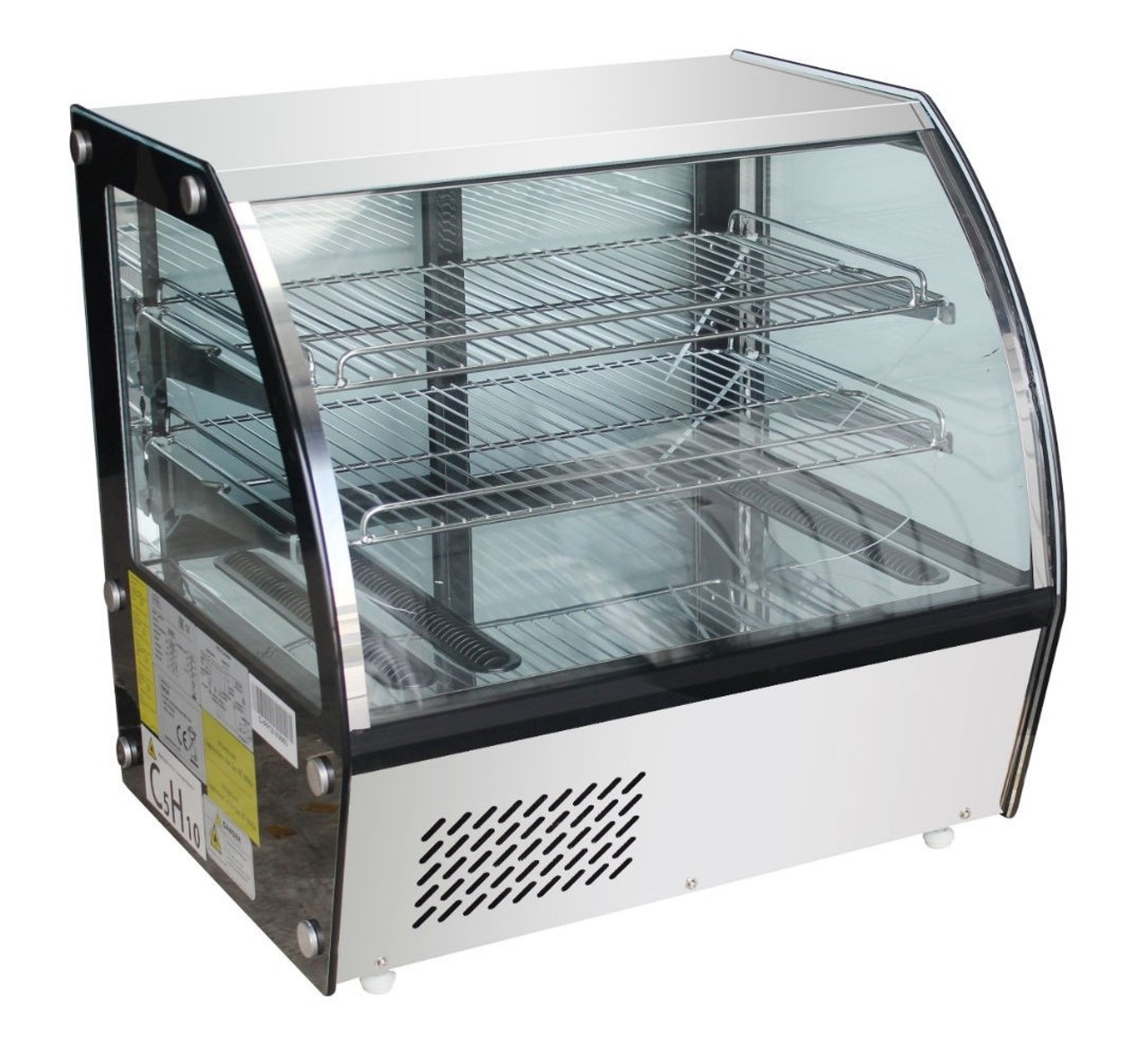
Benchtop units are designed around vertical rather than horizontal space use.
Most stand roughly 40–90 cm tall and use multiple tiers to display products while occupying only modest counter depth.
This vertical approach allows several levels of product to be shown in the footprint of a single counter section.
Many models come in widths from about 40 cm through to around 120 cm, so they can be matched closely to available spaces rather than forcing a fixed size.
This modular sizing helps you avoid sacrificing other essential equipment just to gain refrigeration.
Multi‑sided glass is another key feature. Unlike traditional fridges that can usually only be viewed from the front, benchtop displays often use glass on three or four sides.
This improves visibility for customers approaching from different directions without needing additional floor or counter area.
Some units incorporate flat tops or other design elements that can provide additional usable counter surface when needed.
Others are designed to be stacked or grouped as the business grows, allowing capacity to increase without complete layout changes.
Importantly, benchtop displays sit at counter height, putting products close to eye level for standing customers, which strongly supports impulse purchasing.
When combined with efficient workflow placement, they can significantly improve the revenue generated per square metre of counter space.
Product Categories That Thrive in Benchtop Displays
Cold beverages are often the most obvious winners. Bottled water, soft drinks, iced coffee, kombucha, and other chilled drinks look particularly attractive through glass and are easy for customers to choose quickly.
Seeing all options at once makes it more likely customers will add a drink while ordering coffee or food.
Grab‑and‑go sandwiches and wraps also benefit greatly from visibility.
When customers can instantly see what is available, they make lunch decisions more quickly and confidently than when they need to ask staff to describe options.
Salads and fresh food items gain perceived value from being displayed properly in a well‑lit refrigerated case rather than being hidden away.
Clear packaging and visible fresh ingredients convey quality and care, which encourages higher‑value purchases.
Desserts and sweet treats rely heavily on visual appeal. Items such as muffins, slices, cakes, and pastry treats are much more tempting when customers can see them while waiting for drinks.
Visual cues do more to trigger dessert decisions than menu descriptions alone.
Health‑focused options such as yogurt parfaits, fruit cups, and similar items can also perform well in these displays.
Their presence signals that the café caters to different preferences and dietary choices, broadening appeal.
Local or specialty items, including premium or seasonal products, benefit from prominent placement in a benchtop fridge, ensuring they do not get lost among standard offerings.
Strategic Positioning for Maximum Sales Impact
Counter geography has a major influence on display effectiveness.
The area near the register and coffee machine is usually prime real estate, because customers stand there while ordering, paying, and waiting.
Displays placed in these zones take advantage of natural dwell time and attention.
Observing customer flow patterns during busy periods helps identify the best placement points.
Look at where customers queue, where they pause to decide what to order, and where they wait for drinks, then position the display accordingly.
Sightlines are also vital. Even a well‑stocked fridge will underperform if it sits where customers rarely look.
Ensure the unit sits within the natural field of view of people approaching the counter and those in the queue, and keep key products at eye level where possible.
Lighting complements positioning. While ambient lighting in the café plays a role, internal LED lighting inside the display ensures products look good throughout the day regardless of external light changes.
Different cafés use different strategies; some place one benchtop unit near ordering points and another near pick‑up zones, particularly if they separate food and beverages for clarity.
Operationally, the fridge should be easy for staff to access without causing congestion.
Choosing between rear access, front access, or a particular door style depends on how staff move around the counter during busy service.
Temperature Control and Food Safety Compliance
Food safety rules generally require refrigerated food to be held below a specific temperature, commonly around or below 5°C in many Australian jurisdictions.
Your benchtop display fridge needs to maintain safe temperatures consistently, even when accessed frequently during rush periods.
Daily temperature monitoring should be part of routine opening checks.
Staff should verify that internal temperatures stay within the safe range and keep records if required by local regulations.
Recovery time is crucial for safety during peak use. The unit must return to safe temperature quickly after doors are opened repeatedly.
Choosing a fridge with adequate compressor capacity and appropriate insulation is essential, especially for busy cafés.
Internal product arrangement also affects temperature consistency. Overpacking restricts airflow, leading to warm spots and uneven cooling.
Leaving enough space between items allows cold air to circulate and protects both safety and quality.
Different products can have slightly different ideal temperature needs; for example, dairy‑based items generally require stricter control than sealed drinks.
Set your unit to accommodate your most temperature‑sensitive products while respecting safe storage guidelines.
Regular cleaning of the interior, shelving, and door seals supports both hygiene and efficient operation.
Clean displays not only meet food safety standards but also maintain the visual appeal essential for sales.
Investment Considerations and ROI
Initial purchase prices for commercial benchtop display fridges often fall in the general range of several hundred to a couple of thousand dollars depending on size, brand, and features.
This makes them a mid‑level investment for most cafés when compared with other core equipment.
Sales impact provides the clearest way to see return on investment. If better display of products adds even a modest amount of additional sales per day, the unit can pay for itself relatively quickly.
For example, an uplift of a few dozen dollars in daily add‑on sales can translate into hundreds of extra dollars each month.
Running costs mainly involve electricity usage. Benchtop units commonly consume a fraction of the power of large upright fridges, but exact consumption varies by size and efficiency.
Checking energy specifications and applying your local power rates lets you estimate monthly operating costs realistically.
Annual professional servicing should be budgeted for, alongside occasional minor repairs over time.
Factoring purchase price, electricity, maintenance, and expected lifespan together provides a more accurate total cost of ownership figure.
When weighed against the extra revenue generated by visible, well‑presented products, many cafés find these units are among the most productive uses of limited space and capital.
There is also an opportunity cost element. Counter space used for a display that directly drives sales is generally more valuable than the same area used for low‑value storage or rarely used equipment.
Conclusion
For space‑constrained cafés, a benchtop display fridge is a practical way to combine refrigeration, presentation, and sales in a single compact unit.
It addresses the core challenge of showing chilled products professionally without sacrificing vital workspace behind the counter.
By choosing a unit that fits available space, matches your product mix, and supports your workflow, you can turn a small footprint into a consistent source of additional revenue.
Focusing on reliable temperature control, visibility, and good lighting usually delivers better results than chasing every possible extra feature.
With the right benchtop display fridge in place, many cafés find they not only sell more but also serve customers more efficiently and present a more polished overall offer.
Frequently Asked Questions (FAQs)
1. How much counter space does a typical benchtop display fridge actually require?
Many benchtop units are between about 40 cm and 100 cm wide and 40 cm to 60 cm deep, with heights roughly in the 40–90 cm range.
The smallest commercial units can occupy as little as around 0.2 square metres of counter while still providing practical display capacity.
It is important to measure your available counter area carefully and allow 5–10 cm of clearance around the unit for ventilation.
2. Can a benchtop unit handle busy lunch rush periods?
Quality benchtop display fridges are designed for commercial environments and are built to manage frequent door openings during peak times.
Models with adequate compressor capacity, good insulation, and proper airflow are able to maintain safe temperatures even when accessed many times per hour.
Staying within the stated capacity and ensuring good ventilation around the unit helps maintain reliable performance.
3. What's the realistic sales increase from adding a benchtop display?
Actual results vary, but many cafés report noticeable percentage increases in sales of items moved from hidden storage into a well‑placed benchtop display.
Venues that previously had no visible cold options often see the largest gains because customers can suddenly see what is available.
Tracking the sales of displayed items for at least a month before and after installation provides the clearest picture for your own business.
4. Should I display drinks or food items in my benchtop fridge?
This depends on your product mix and customer habits. Coffee‑focused cafés often see strong results from chilled drinks because many customers add them to existing orders.
Cafés with significant lunch trade may prioritise sandwiches, wraps, and salads to support meal purchases.
Many businesses find a mixed approach works well, using different shelves for drinks and food and adjusting allocations based on what sells best.
5. How often do benchtop display fridges need professional maintenance?
Annual professional servicing is usually recommended for commercial refrigeration equipment to maintain efficiency and reduce the risk of breakdowns.
These services typically include checking refrigerant levels, cleaning coils, testing components, and verifying temperature accuracy.
Between professional visits, daily exterior cleaning, regular internal cleaning, and ongoing temperature checks help keep the unit performing well for years.