

Cheap Under Counter Fridge: Budget Cooling Solutions
Posted by National Kitchen Equipment on 10th Dec 2025
Cheap Under Counter Fridge: Budget-Friendly Cooling Options for Small Businesses
- What Makes an Under Counter Fridge “Cheap”?
- Why Budget Matters for Small Business Owners
- Essential Features You Actually Need
- Where to Find the Best Budget Options
- Making Budget Units Last Longer
- When to Upgrade Beyond Budget Options
- Conclusion
- Frequently Asked Questions (FAQs)
- 1. What’s a reasonable price range for a cheap under counter fridge?
- 2. Can I use a residential under counter fridge in my café or restaurant?
- 3. How much does it cost to run a budget under counter fridge?
- 4. What’s the expected lifespan of a cheap under counter fridge?
- 5. Should I buy new or consider refurbished units?

Image credit: https://www.freepik.com/free-photo/kitchen-bar_2079069.htm
Finding a cheap under counter fridge that actually works reliably can feel like searching for a unicorn. You need proper refrigeration without breaking your startup budget, but you do not want a unit that fails in a few months or struggles to maintain safe temperatures during service.
Common concerns include whether a budget model will last through a busy season, whether cheaper brands can be trusted to keep food safe, and whether too much quality is being sacrificed to save money up front.
The key is understanding which features matter for your operation and which premium extras you can skip so you can find affordable under counter refrigeration that delivers value without a premium price tag.
What Makes an Under Counter Fridge “Cheap”?
When talking about cheap under counter fridges, the focus is usually on units priced roughly between $500 and $1,500, rather than premium commercial models that can cost $2,000 to $5,000 or more.
The lower price comes from a mix of design choices and brand positioning, some of which are perfectly acceptable trade-offs.
Budget models often use simpler designs with fewer extra features. You may see manual temperature controls instead of digital panels, standard shelving instead of highly customisable options, and more basic stainless or painted finishes.
These simplifications reduce manufacturing costs without necessarily undermining core refrigeration performance.
Cheaper units may have smaller compressors and lighter insulation. This does not always equal poor performance but does mean you must be realistic about capacity and how hard the unit is worked.
A budget fridge can perform well for moderate use yet struggle if it is constantly opened during intense service or packed beyond its recommended capacity.
Brand strategy also plays a role. Lesser-known or direct-import brands often offer lower prices than established commercial names.
Sometimes a higher price reflects proven reliability and robust service networks, while in other cases it mainly reflects branding.
The goal is to separate smart budget choices from false economies. A cheap under counter fridge that lasts several years with minimal issues is a bargain; one that fails repeatedly or cannot maintain safe temperatures is costly at any price point.
Why Budget Matters for Small Business Owners
Starting or running a small café, restaurant, or food business usually means tight margins and limited capital.
Under counter refrigeration is essential, but it must compete with many other priorities such as cooking equipment, prep areas, and front-of-house fit-out.
For many operators, spending $4,000 on under counter refrigeration is unrealistic when the same funds need to cover multiple pieces of equipment.
Reliable budget units allow you to meet food safety needs while reserving capital for areas that drive growth, such as marketing, staffing, or higher-impact equipment.
Cash flow is another consideration. Lower upfront costs reduce debt and free working capital for inventory and day-to-day expenses.
The difference between an $800 budget fridge and a $2,500 premium unit can fund extra staff hours or launch campaigns during your opening period.
For businesses needing multiple refrigeration points, budget units can work well for secondary storage.
You might use a premium upright fridge for main storage and cheaper under counter units for drinks, garnishes, or overflow, taking a tiered approach that stretches your budget further.
There is also a risk management angle. Refrigeration failures can lead to spoiled stock and reputational damage.
The aim is not simply to buy the absolute cheapest fridge but to identify affordable units that still deliver reliable performance and food safety compliance.
Essential Features You Actually Need
Temperature consistency is non-negotiable. An under counter fridge must maintain steady temperatures around 0°C to 4°C for safe food storage.
Look for models with decent insulation and compressors specified for commercial use, even if the controls are basic.
Adequate capacity is important. Overstuffed units cool poorly and force the compressor to work harder.
Assess what you actually need to store and select a size that manages this comfortably rather than choosing the smallest and then overloading it.
Common under counter capacities range from about 60 to 200 litres, with smaller sizes suitable for simple setups and larger volumes serving busier operations.
Durable construction helps extend lifespan. Stainless steel exteriors resist corrosion and are easier to clean than cheaper painted finishes.
Check that door hinges, handles, and shelves feel robust and can handle daily commercial use.
Door seals are critical for efficiency and performance. Good seals keep cold air in and warm air out, reducing energy use and compressor strain.
Even budget models should offer adjustable shelving so you can configure the interior for different product sizes.
Accessible drainage is useful, particularly for manual-defrost units, as it simplifies maintenance and defrost cycles.
Energy efficiency matters because these units typically run 24/7. A slightly higher purchase price for better efficiency can be offset by lower power bills over the life of the fridge.
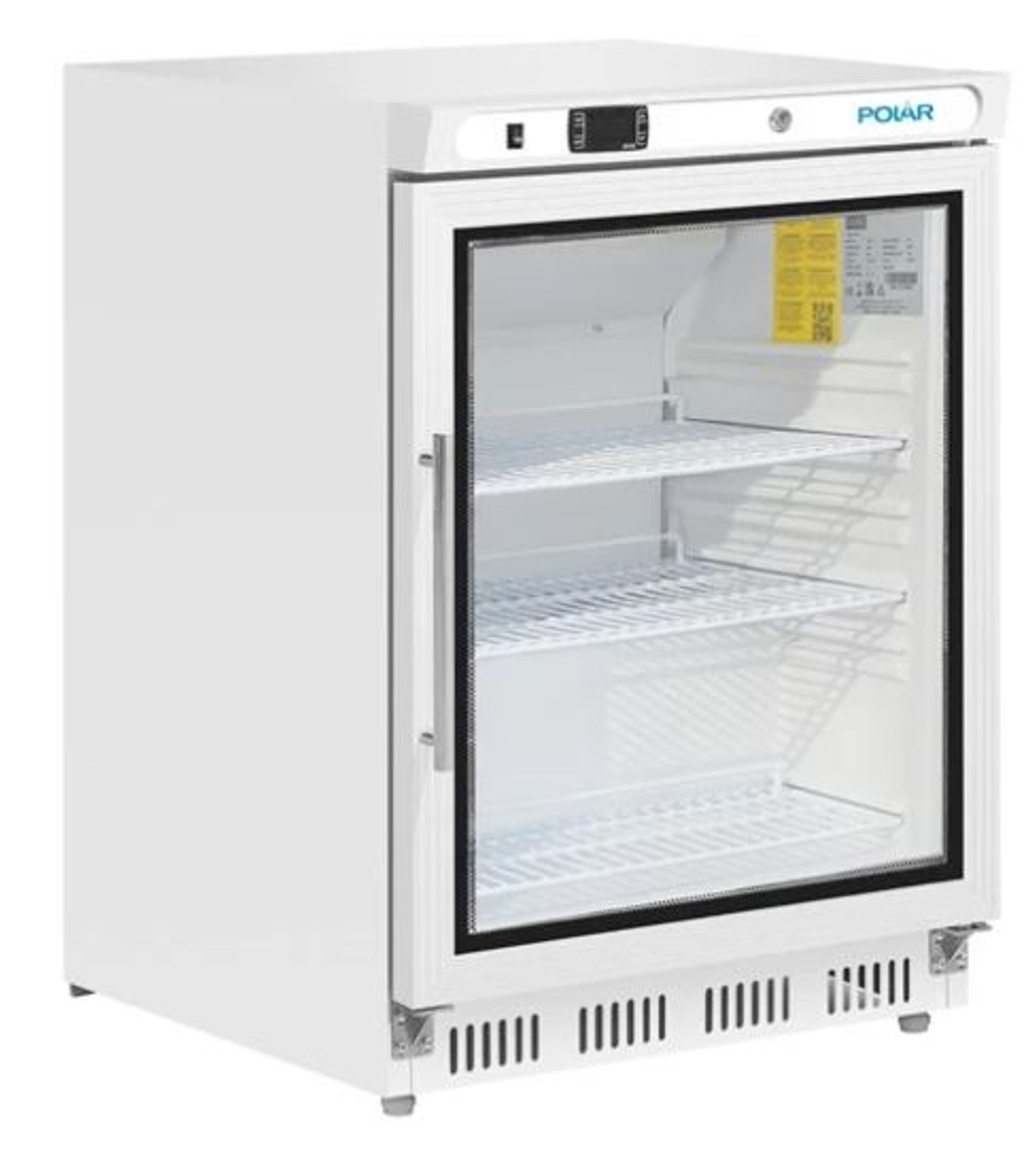
Where to Find the Best Budget Options
Commercial equipment suppliers often stock entry-level ranges aimed at small businesses and startups.
These lines are designed to balance affordability with the standards required in commercial kitchens.
Some suppliers offer clearance pricing on previous models or ex-display units, which can deliver good value if warranties still apply.
Online marketplaces provide competitive pricing due to direct sales and lower overheads.
Reputable sellers list detailed specifications, warranty terms, and customer reviews, allowing you to compare options easily, though freight costs for heavy units should be factored in.
Hospitality auctions and liquidation sales can sometimes offer excellent bargains on used under counter fridges from closed venues.
However, these options require careful inspection and an acceptance of reduced or non-existent warranty support.
Second-hand commercial equipment dealers that specialise in refurbished units may offer more predictable value.
Good dealers test and clean equipment and may include limited warranties, giving access to higher-spec brands at budget prices.
Direct importers can sometimes supply less well-known brands at sharp prices.
When considering these, check that parts and service are available locally and that warranty support is clear.
Local commercial kitchen suppliers can also be flexible on pricing, particularly when you are purchasing multiple pieces or fitting out a whole site.
They add value through advice and after-sales service that purely online sellers do not provide.
Making Budget Units Last Longer
Proper installation prevents many avoidable issues. Ensure there is sufficient ventilation around the unit, usually at least several centimetres of clearance at the sides and back as per the manufacturer’s recommendations.
Level the fridge so doors close correctly and internal components are not under unnecessary strain.
Regular cleaning is one of the simplest ways to extend lifespan.
Wipe down door seals weekly to prevent buildup that reduces their effectiveness and clean condenser coils every month or two to maintain efficient heat dissipation.
Use a separate thermometer inside the cabinet to verify actual temperature against the control setting.
If you notice continuous compressor operation or unexplained temperature swings, investigate promptly instead of waiting for a failure.
Avoid overloading the fridge beyond its intended capacity.
Packed shelves restrict airflow, leading to uneven cooling and forcing the compressor to work harder, which shortens equipment life.
For manual-defrost models, schedule defrosting before frost becomes heavy on the evaporator surfaces.
Thick frost effectively insulates the cooling surfaces and reduces efficiency.
Staff habits also matter. Encourage quick door openings and discourage leaving the door open while performing other tasks.
Even small changes in how staff use the fridge can result in lower energy usage and less mechanical stress.
Annual professional servicing is beneficial even for budget units.
Technicians can check refrigerant levels, assess components, and carry out preventative maintenance that reduces the likelihood of unexpected breakdowns.
When to Upgrade Beyond Budget Options
Sometimes a cheap under counter fridge is perfectly adequate, especially for lower-stress applications or secondary storage.
Other times, upgrading to a more robust unit is the smarter choice.
If your operation is high-volume and the under counter fridge is opened constantly during service, reliability becomes critical.
In these cases, a more durable commercial-grade unit may be justified because failures would directly disrupt service.
Special configurations, such as multi-door or drawer units that improve workflow, can also justify higher investment if they significantly speed up service and reduce door-open time.
Applications requiring very precise temperature control, such as certain speciality ingredients, may demand units with more accurate digital controls and better monitoring than typical budget models offer.
Warranty and service support are additional triggers for upgrading.
For backup or non-critical storage, a short warranty may be acceptable, but primary refrigeration usually warrants longer coverage and a strong service network.
Conclusion
A cheap under counter fridge does not have to mean accepting poor quality or unreliable performance.
By focusing on the essentials—consistent temperature control, adequate capacity, solid construction, and reasonable efficiency—you can choose budget models that provide dependable service.
Skipping non-essential premium features and finishes keeps costs down while still protecting food safety and day-to-day operations.
For small businesses watching every dollar, smart budget refrigeration decisions free capital for other priorities such as marketing, staffing, or menu development.
When you match the unit to your actual usage patterns and maintain it properly, a well-chosen cheap under counter fridge can deliver value every day.
Frequently Asked Questions (FAQs)
1. What’s a reasonable price range for a cheap under counter fridge?
Budget commercial under counter fridges commonly range from about $500 to $1,500 depending on size and features.
Units below this are usually residential-grade and may not withstand commercial demands, while higher prices move into mid-range or premium territory.
For many small businesses, the $700 to $1,200 band offers a good balance between affordability and durability.
2. Can I use a residential under counter fridge in my café or restaurant?
Regulations vary by location, but many food-service environments require commercial-grade equipment that meets specific standards.
Residential units are generally not designed for constant use, frequent door openings, and the temperature stability required in commercial settings.
They often fail quickly under commercial loads, so basic commercial models are usually a better investment even at slightly higher cost.
3. How much does it cost to run a budget under counter fridge?
Most under counter fridges use roughly 1 to 3 kWh per day depending on size, insulation, and usage patterns.
At typical Australian commercial electricity rates, that translates to an estimated $30 to $80 per month in running costs.
Less efficient units and hot environments push costs higher, while better-insulated modern models can be cheaper to run over time.
4. What’s the expected lifespan of a cheap under counter fridge?
With reasonable maintenance, many budget commercial units last in the range of about 3 to 7 years.
Premium fridges can often reach 10 years or more, but actual lifespan depends heavily on build quality, usage intensity, and the consistency of cleaning and servicing.
Busy kitchens with limited maintenance will see shorter lifespans than lightly used units that are well cared for.
5. Should I buy new or consider refurbished units?
New budget units offer clear warranties and predictable performance, which simplifies financial planning.
Refurbished equipment from reputable dealers can provide higher-spec brands at similar prices to new budget units, although warranties may be shorter.
If a refurbished fridge includes a reasonable warranty and comes from a known brand with available parts, it can represent excellent value, but buying untested used units without warranty is riskier.