

Benchtop Display Fridge: Space-Saving Café Cooling
Posted by National Kitchen Equipment on 5th Dec 2025
Benchtop Display Fridge: Compact Cooling Solutions for Busy Holiday Cafés
- What Is a Benchtop Display Fridge?
- Why Benchtop Models Work for Holiday Periods
- Key Features to Look For
- Choosing the Right Size and Configuration
- Maximizing Your Benchtop Display During Peak Times
- Maintenance and Troubleshooting
- Conclusion
- Frequently Asked Questions (FAQs)
- 1. What's the ideal capacity for a small café benchtop display fridge?
- 2. How much counter space does a typical benchtop unit require?
- 3. Can benchtop display fridges handle different product types together?
- 4. What's the average power consumption for a benchtop unit?
- 5. Do I need special electrical requirements for installation?

Image credit: https://www.freepik.com/free-photo/people-working-cafe_2033534.htm
A benchtop display fridge is the unsung hero of small café operations, especially when you are dealing with limited counter space and holiday crowds that seem never-ending.
If you have ever struggled to fit refrigeration into a compact setup while still showcasing drinks, sandwiches, and grab-and-go items, you know exactly how challenging it can be.
The questions are always similar: how do you maximise limited counter space, keep products visible without sacrificing valuable workspace, and ensure a smaller unit can handle the holiday rush when foot traffic doubles?
The good news is that modern benchtop units pack serious cooling power into surprisingly small footprints. They are designed specifically for businesses where every centimetre counts but product visibility still matters.
What Is a Benchtop Display Fridge?
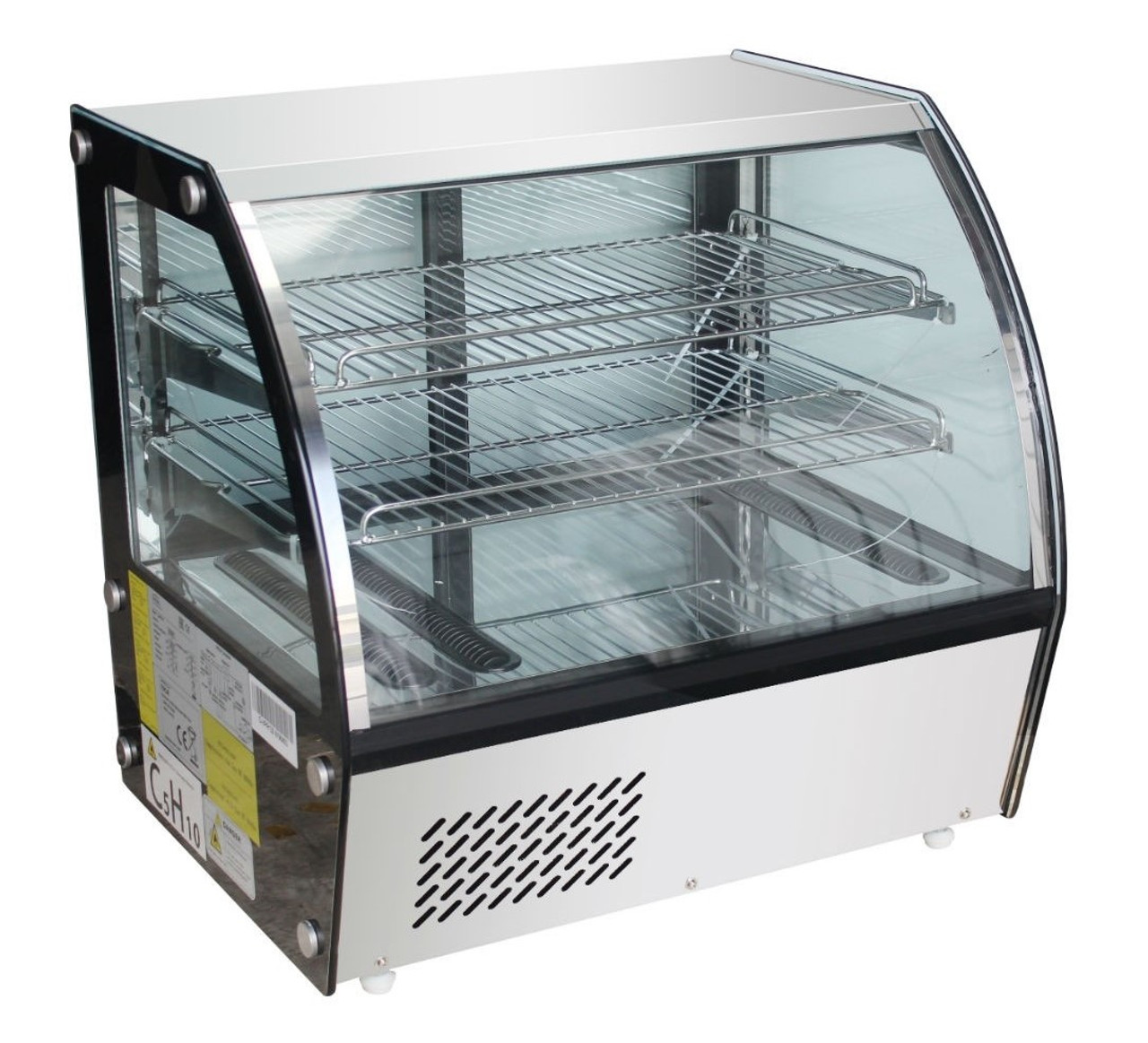
A benchtop display fridge is a refrigerated display unit designed to sit on your counter rather than taking up floor space.
These compact fridges typically range from 40 to 150 litres in capacity and measure roughly 40 cm to 100 cm in width, fitting neatly into tight service areas.
They are built to showcase chilled products while integrating into crowded counters behind your service area or at customer-facing points.
The design focuses on maximising visibility within a small form factor. Most models feature glass on three or four sides so customers can see products from multiple angles without you losing valuable counter real estate.
The refrigeration system is usually tucked away at the back or bottom so most of the visible area is dedicated to your products.
Temperature control works similarly to larger units, maintaining consistent cooling between about 2°C and 8°C depending on what you are storing.
These units are engineered to cool smaller spaces quickly and maintain temperature even when doors are opened frequently during busy services.
You will find two main configurations: pass-through models with doors on both sides for quick service, and single-access units with doors or sliding panels on one side.
Some are optimised for beverages with can and bottle racks, while others use adjustable shelving suitable for sandwiches, salads, cakes, or mixed products.
To explore general commercial display fridge designs, you can review specialist ranges such as the display fridges section on National Kitchen Equipment’s website.
Why Benchtop Models Work for Holiday Periods
Holiday trading brings specific challenges that benchtop units are well suited to handle.
The rush between late November and New Year means more customers, faster service expectations, and less time to restock from back-of-house storage.
Having chilled products right at the service counter eliminates trips to walk-in fridges or storerooms.
Your barista or server can hand over a cold drink or grab a sandwich without leaving the station, which matters when you are several customers deep in the queue.
Those saved seconds add up to faster service and shorter lines during peak periods.
The visibility factor drives impulse purchases. When customers waiting for their coffee can see chilled drinks, fresh salads, or desserts at eye level, they are more likely to add items to their order.
This is especially valuable during holiday periods when people are in a spending mood and looking for convenient food and drink options.
Space efficiency becomes critical when you add seasonal products or temporary displays.
A benchtop display fridge does not require a complete layout change; you can position it on existing counter space to create a new sales point without major renovations.
These units also handle mixed product types well. During holidays, you might stock festive drinks alongside regular inventory or add seasonal treats to your usual sandwich selection.
Benchtop models with adjustable shelving can adapt to changing product mixes without requiring separate refrigeration for each category.
Key Features to Look For
Size matters, but balance is important. A benchtop display fridge that is too large for your counter becomes a workflow obstacle, while one that is too small will run out of capacity during peak trading.
Measure your available counter space carefully, including depth and height clearance, and consider the nearby equipment such as your coffee machine, POS, and prep area.
Glass quality affects both product visibility and energy efficiency. Double-glazed or well-insulated glass helps reduce running costs and limits condensation on busy days.
Clear, distortion-free glass lets customers see products properly, which is important when they are choosing between different drinks or snacks.
Internal lighting has a major impact on presentation. Good LED lighting that illuminates from above or behind makes drinks and food look more appealing and easier to identify.
Poor lighting can make everything look flat and uninviting, which undermines the purpose of having a display fridge.
Door mechanisms need to fit your operation. Sliding doors save space and suit tight environments but can be slower to operate.
Hinged doors open quickly but require clearance behind the counter. Some models provide rear access for staff while customers view from the front, which is excellent for restocking during service.
Temperature recovery speed determines how well the unit copes when doors are opened frequently.
Units with strong compressors and good insulation return to the set temperature quickly, protecting product quality even during intense holiday use.
Effective drainage prevents water build-up from condensation and defrost cycles. Check that drainage is accessible and easy to manage.
Energy efficiency ratings directly influence operating costs. An efficient unit may cost more upfront but will generally save money over the long term, especially if it runs continuously.
Choosing the Right Size and Configuration
Start by auditing your actual product needs. Count how many drinks, sandwiches, salads, or other items you want to display during your busiest periods and then add a buffer for growth and seasonal items.
This gives you a realistic capacity target instead of guessing.
Counter space sets your maximum dimensions. Measure width, depth, and overhead clearance, and allow for ventilation space around the unit based on manufacturer recommendations.
Workflow integration is just as important as physical size. Place the fridge where it makes service faster, not slower.
Ideally, staff should be able to access it without crossing each other’s paths during busy periods.
Your product types also influence configuration. If you primarily stock canned or bottled drinks, racks or bottle shelves will be helpful.
If you focus more on wrapped food such as sandwiches and salads, flat or adjustable shelves work better.
Mixed inventories benefit from adjustable shelving that can be reconfigured as your range changes through the year.
Height is another consideration. Tall bottles or large salad containers require enough vertical space between shelves.
Some units offer removable or adjustable shelves to create taller spaces when needed, so always check internal dimensions rather than just looking at the overall footprint.
Customer viewing angles also matter. If customers only approach from one direction, a single-sided display is usually enough.
If queues form along the counter, a unit with glass on multiple sides can make products visible to more people at once.
Finally, budget for the full installation, not just the purchase price. Include any required electrical work, counter modifications, delivery, and the initial stock you will need to fill the fridge.
Maximizing Your Benchtop Display During Peak Times
Holiday preparation begins before the crowds arrive. Stock your fridge strategically with your bestsellers at eye level and within easy reach.
Place premium or higher-margin products in the most prominent positions and keep staple items on lower shelves.
Temperature management becomes more important when doors are opened frequently.
Check the temperature at the start of the day and monitor it during service. Avoid overloading the cabinet to the point where air cannot circulate properly.
Restocking strategy prevents empty shelves during peak times. Keep backup stock in your main fridge so you can quickly top up the display during short breaks in service.
Pre-chilling stock before you move it into the display helps avoid temperature spikes.
Cleaning schedules should not slip just because you are busy. Wipe glass panels at least a couple of times each day during peak periods.
Smudges and fingerprints reduce the appeal of your products and can give a poor impression of hygiene standards.
Product rotation is crucial to maintaining freshness and minimising waste.
Use a first-in, first-out approach, especially when stocking up for holidays when you may be holding more inventory than usual.
Pricing clarity matters when queues are long. Ensure each product is clearly priced so customers can make quick decisions without needing to ask staff repeatedly.
Maintenance and Troubleshooting
Daily maintenance tasks are simple but prevent more serious issues. Wipe internal surfaces to remove spills and residue that can cause odours or hygiene problems.
Check door seals for damage or debris, as poor seals force the unit to work harder and increase energy use.
Empty and clean any condensation trays according to the manufacturer’s instructions.
Weekly, plan a deeper clean. Remove and wash shelves, check that the condensation drain is clear, and verify that the displayed temperature matches a thermometer placed inside the unit.
This helps pick up minor calibration issues early.
Common issues often have straightforward causes. If you see excessive condensation, ensure the door closes properly and that the unit is not near heat sources or in direct sunlight.
If cooling seems weak, make sure ventilation grilles are not blocked and that there is enough space around the unit for air to circulate.
Some temperature fluctuation during busy periods is normal, but if the fridge struggles to maintain its set point even when it is quiet, it may be time to organise professional servicing.
Listen for unusual noises, check for frost build-up, and note if the compressor seems to run constantly.
Professional servicing at least once a year, ideally before your busiest season, helps prevent breakdowns.
Technicians can check refrigerant levels, test components, clean internal mechanisms, and address issues before they turn into downtime.
Conclusion
A benchtop display fridge solves a core challenge for small cafés: how to showcase chilled products professionally without sacrificing valuable workspace.
The right unit turns limited counter space into a revenue-generating display that supports impulse sales and speeds up service.
Choose your fridge based on real space constraints, capacity requirements, and the types of products you stock.
Avoid paying for features you will not use, but do prioritise essentials such as accurate temperature control, efficient insulation, and reliable build quality.
A good benchtop display fridge can reduce waste, enhance product presentation, and support smoother operations during both everyday trading and peak holiday periods.
Frequently Asked Questions (FAQs)
1. What's the ideal capacity for a small café benchtop display fridge?
Many small cafés work well with around 60 to 100 litres of capacity, which typically holds 30 to 50 drinks or a mix of drinks and food items.
If your offer is heavily focused on chilled beverages or you have very high volume, a 100 to 150 litre unit can be a better fit.
Base your decision on peak-period requirements rather than average daily sales.
2. How much counter space does a typical benchtop unit require?
Standard benchtop models often range from about 40 cm to 100 cm wide and roughly 40 cm to 60 cm deep.
You will also need around 5 to 10 cm of clearance on each side for ventilation, so factor that into your measurements.
Always check height clearance too if you have overhead shelving or cabinets.
3. Can benchtop display fridges handle different product types together?
Yes, as long as the items share similar temperature needs, typically in the 2°C to 8°C range.
You can usually store drinks alongside sandwiches, salads, and desserts without any problems.
Use shelf separation to prevent cross-contamination and avoid placing strong-smelling items next to products that absorb odours easily.
4. What's the average power consumption for a benchtop unit?
Smaller benchtop units commonly use around 0.5 to 1.5 kWh per day, though actual consumption depends on size, efficiency, and usage.
This roughly equates to an electricity cost in the tens of dollars per month, with more efficient units tending towards the lower end.
Frequent opening and warm ambient conditions will increase power usage.
5. Do I need special electrical requirements for installation?
Most benchtop display fridges are designed to run on standard 240 V power outlets commonly found in Australian commercial settings.
Check the unit’s power rating, which for smaller models is often in the 200 to 400 watt range, and ensure your circuit can handle the load.
If the outlet is shared with other high-draw equipment, you may need a dedicated circuit and should have a qualified electrician verify the setup.